
Stiffness and Restricted Motion
A practitioner can assess reduced joint motion, guarded movement, difficulty rising, reluctance on stairs, or changes in how an animal turns and bends.
Serving Austin, Texas & surrounding areas
Calls answered around the clock
Animal chiropractic referrals in Austin
One call connects you with a local animal chiropractic contractor who serves Austin and can discuss your animal's mobility and care.
Mobility-focused animal care
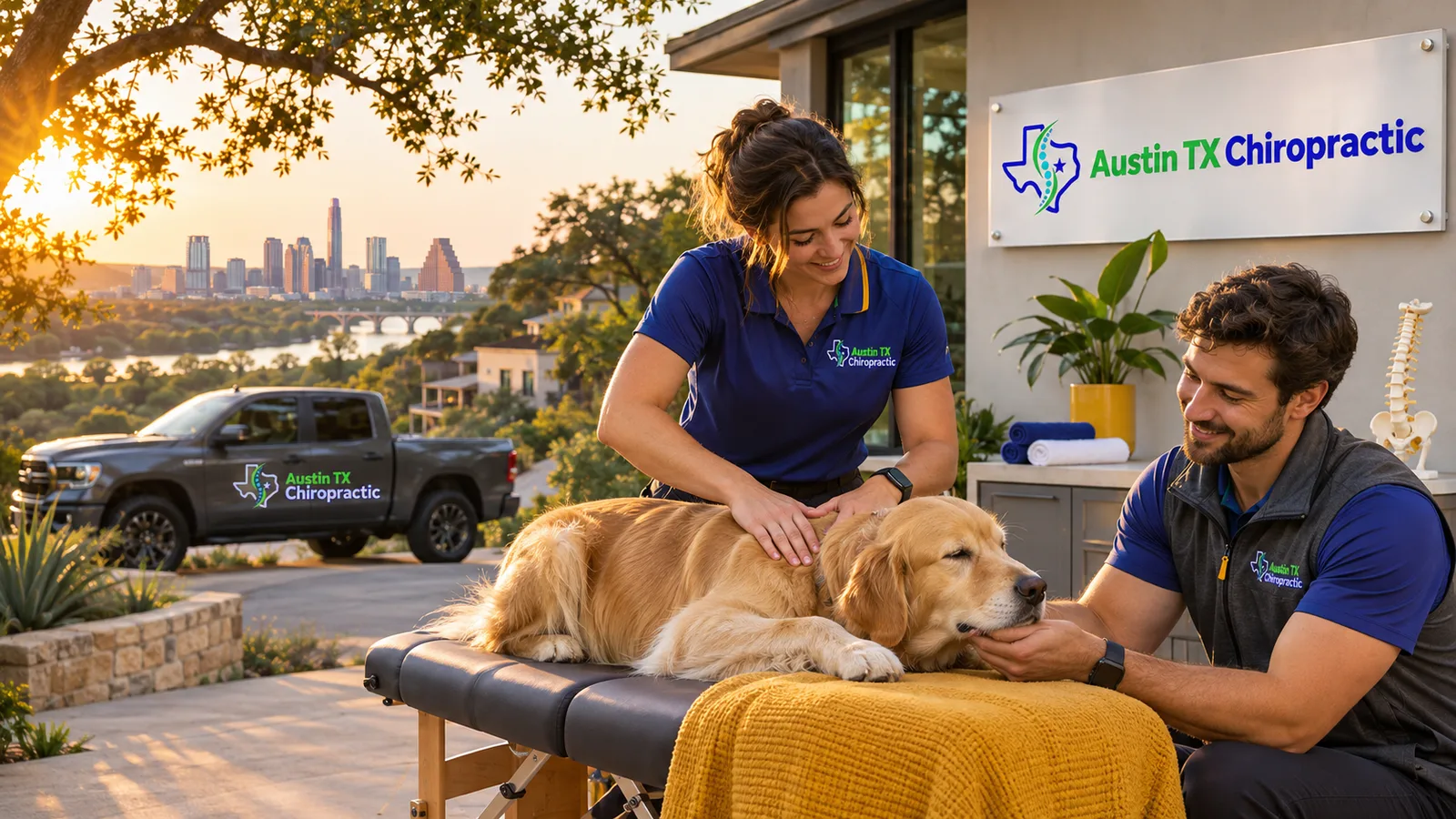
Austin animal chiropractic focuses on joint motion, spinal mobility, gait, posture, and the way an animal uses its body. Owners often consider it when a dog seems stiff after rest, a cat hesitates before jumping, or a horse feels uneven during work. It may also be discussed as part of ongoing wellness care for active, working, or aging animals.
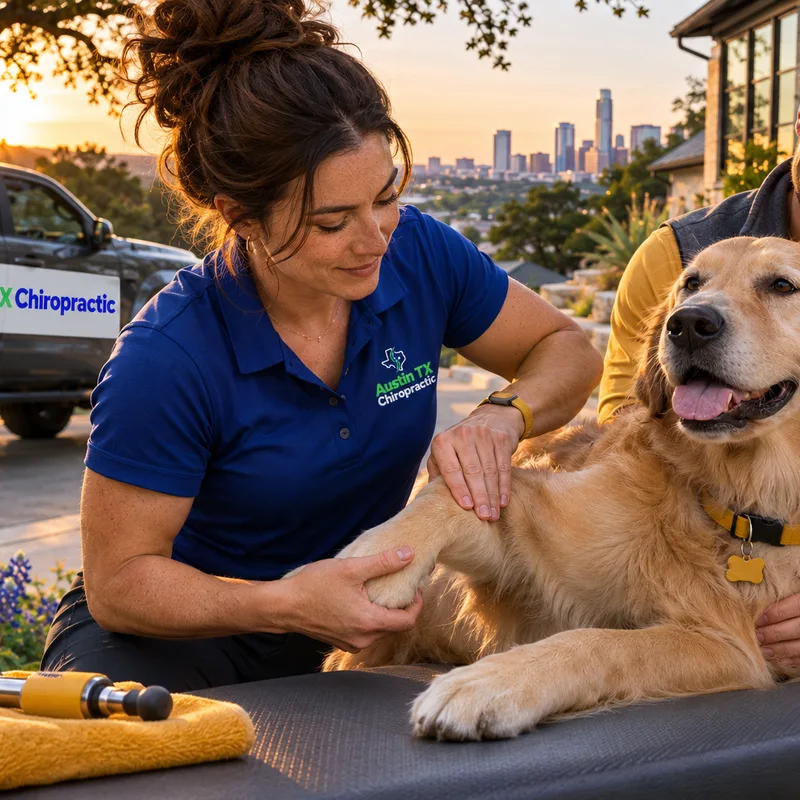
An appointment generally starts with a health and movement history. The practitioner may observe the animal walking, turning, sitting, rising, or performing other movements appropriate to the species. Hands-on palpation can help assess muscle tone, tenderness, joint motion, and areas of restricted movement. If chiropractic care is appropriate, the practitioner uses controlled, targeted adjustments rather than forceful twisting.
Animal chiropractic should complement veterinary care. Sudden weakness, severe pain, collapse, breathing trouble, loss of bladder or bowel control, major trauma, or an inability to stand calls for veterinary attention. A veterinarian can also evaluate infection, fracture, neurologic disease, arthritis, and other conditions that may require imaging, medication, or a different treatment plan.
We connect callers with chiropractic contractors throughout Austin, TX who handle animal chiropractic care. You speak with the contractor directly about species served, appointment setting, veterinary coordination, treatment approach, and whether the setting is suitable for your animal.
Care considerations
Movement patterns, health history, veterinary findings, and the animal's needs help shape the assessment and care discussion.
A practitioner can assess reduced joint motion, guarded movement, difficulty rising, reluctance on stairs, or changes in how an animal turns and bends.
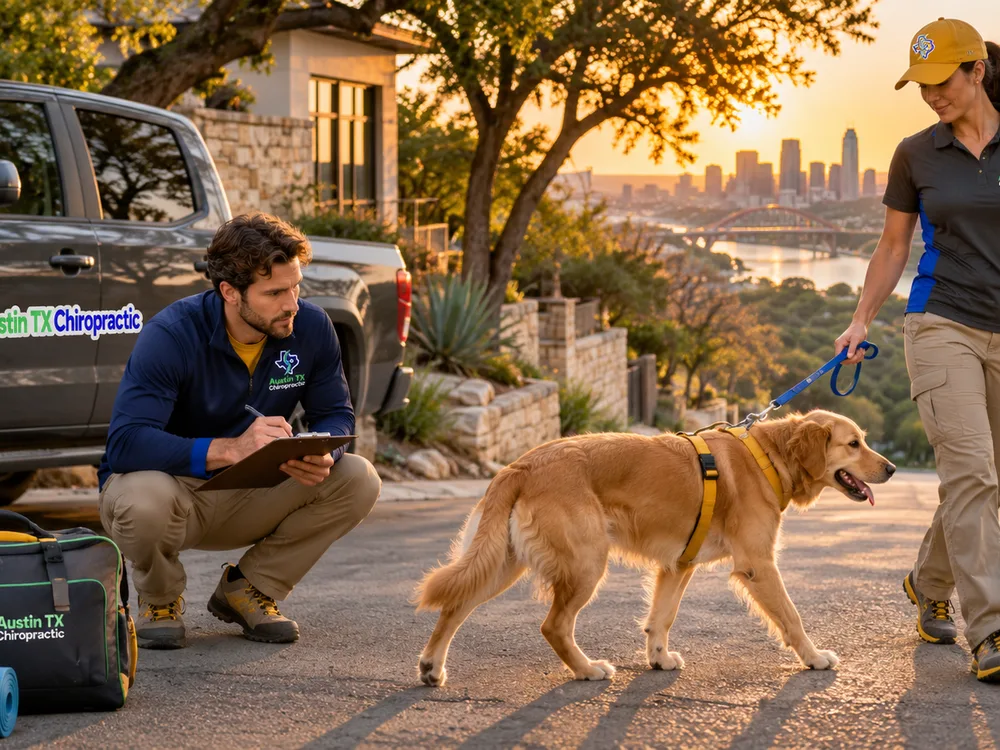
Uneven steps, altered weight bearing, shortened stride, and a changed head, back, or tail position can guide the movement assessment.
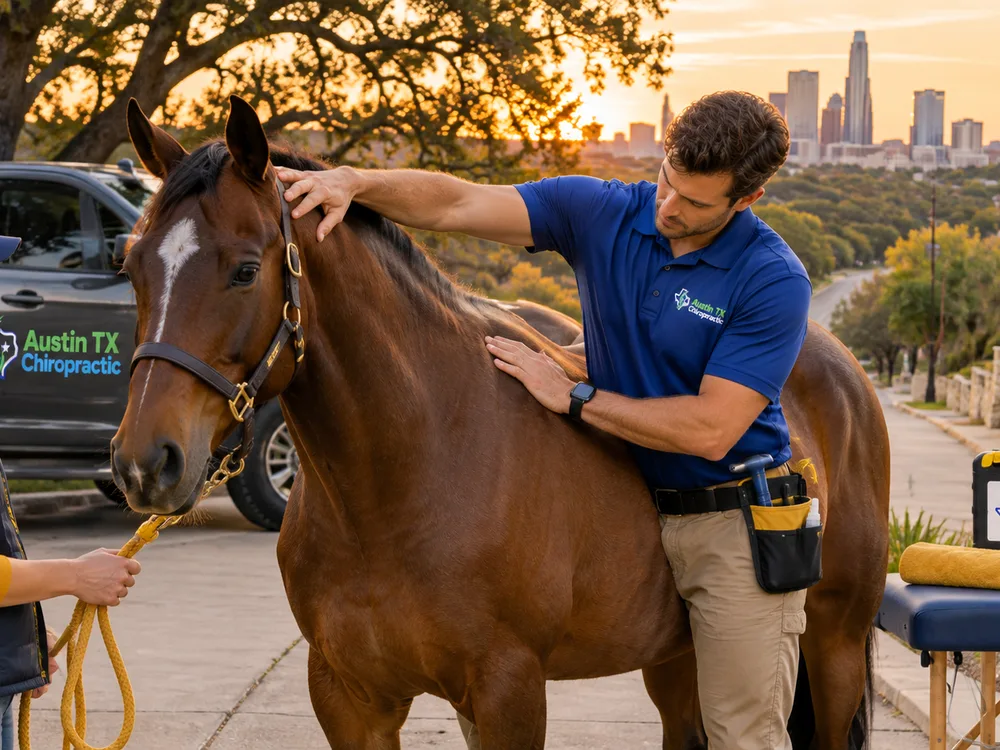
Dogs involved in running, agility, field work, or long walks place repeated demands on their joints and soft tissues. Horses may be assessed in relation to training, tack, footing, and performance.
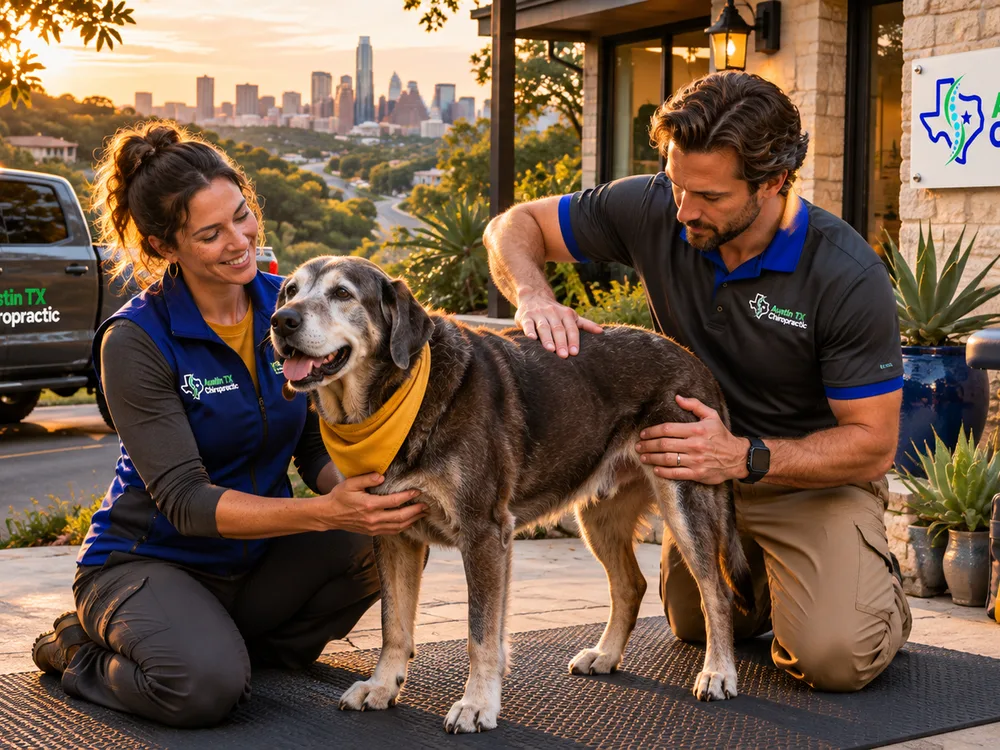
Older dogs, cats, and horses may develop slower transitions, reduced flexibility, and compensatory movement. Care should account for diagnosed arthritis and other age-related conditions.
When an animal has an established diagnosis or prior injury, the practitioner can discuss whether chiropractic care fits the veterinarian's treatment plan.
One call connects you with a local contractor. You discuss the animal and appointment details directly, receive the quote from the contractor, and decide whether to proceed.
Direct referral process
Step 1 of 4
Call the number shown and enter your ZIP code. You are connected directly with a local contractor who serves that area.
Step 2 of 4
Discuss the animal's species, age, current veterinary care, mobility concerns, and suitable treatment setting. Ask which records or veterinary information may be useful for the appointment.
Step 3 of 4
The contractor explains scheduling, the examination process, species served, and the quote. You decide whether to arrange the visit.
Step 4 of 4
After assessing posture, gait, joint motion, and relevant history, the practitioner can explain findings, proposed care, and signs that warrant veterinary evaluation.
Speak directly with a local animal chiropractic contractor about mobility concerns, species served, and the next appropriate step. One call starts the conversation, with no forms to fill.
CALL NOW: (737) 377-6727Care in context
Frequently asked questions
A veterinarian should assess urgent symptoms, major trauma, severe or sudden pain, weakness, collapse, inability to stand, breathing trouble, or loss of bladder or bowel control. For stiffness, recurring movement changes, or performance concerns, speak with the contractor about whether a veterinary evaluation should come first. Chiropractic care does not replace diagnosis or treatment for fractures, infection, neurologic disease, or internal illness.
Discuss the animal's age, species, activity level, diagnosed conditions, medications, prior injuries, recent changes in gait or behavior, and current veterinary care. For horses, tack, training schedule, footing, and recent farrier work may also affect movement. Ask how the practitioner coordinates care when veterinary input is needed.
The practitioner generally reviews relevant history, observes movement, and assesses posture, muscle tone, tenderness, and joint motion. Treatment may involve specific adjustments delivered with controlled hand placement. The exact examination depends on the species, the concern, and whether the animal can be handled safely.
Practitioners may work with dogs, cats, horses, and other animals, but the species served varies by contractor. Ask directly about the animal in question, the treatment setting, handling requirements, and any veterinary documentation needed before arranging an appointment.
Suitability depends on the diagnosis, current symptoms, and the animal's overall health. Chiropractic care may be considered as one part of a veterinarian-guided plan for mobility, but it does not repair a fracture or replace treatment for joint disease. The practitioner should explain what care can reasonably address and when veterinary reassessment is appropriate.
Ask what the assessment found, which areas the practitioner proposes to treat, how progress will be evaluated, and which changes should be reported to a veterinarian. You can also ask about appointment frequency, handling methods, species-specific experience, cancellation terms, and the full quote. The contractor provides those details, and you decide whether to proceed.
Local Austin connection
One call connects you with a contractor who serves the Austin area. Discuss your animal's mobility, the type of care offered, and appointment options directly with the person who provides the service.
Our location
Explore our Austin location and the surrounding communities within approximately 10 miles.